How to Start an Annual Flower Garden
Summer is just around the corner, which means it's a good time to begin planting annuals. Available in a variety of textures and colors, these vibrant flowers can add personality and life to any area of your home. Create a warm welcome for your houseguests by planting annuals near the entrance of your home, or add color and texture to your landscape by planting annual flowerbeds at the base of your trees and shrubs.
Whatever your goals are for planting annuals, it's important to begin with a layout plan. To follow are some simple preparation tips to help you create the design and effect you desire.
Design and Layout
- Layout – Sketch a plan of where and how you want to plant your annuals. This can help you better determine the number of plants you’ll need to buy before heading to a nursery.
- Color theme ‐ Designing a color theme gives your plan order and purpose, and eliminates a disorganized effect by using too many colors. Popular color themes include:
- All white
- Shade mixtures of one color
- All pastels
- A sharp color contrast to your home or the trim on your home
- Plant levels – Plan a nice size transition from front to back so all your annuals are visible.
- Spacing – Avoid planting your annuals too close. It may look good at first, but as the plants mature, they'll be over crowded and decline. Reference flower tags or seed packets for spacing recommendations.
- Mixtures – For a more natural look, blend growth textures such as an airy cosmos with bolder zinnias or sprawling petunias with upright salvia.
Choosing Your Annuals
Many annual flowers including alyssum, marigold, sunflowers and zinnias can easily be started from seed sown directly in the ground. To do so, scatter the seed in the prepared planting bed, lightly cover with soil and keep moist until germination. Once the seedlings are a few inches high, thin them out to the proper spacing.
Other annuals come in a variety of sizes and containers including six-packs, four-inch pots or gallon pots at the nursery. Larger plants are typically more expensive, but will give you color faster while smaller plants will bloom longer into the season.
Preparation and Care
Now that you have a game plan, it's time to prepare your planting areas. The following tips will help you create a healthy area where your annuals can thrive all summer and into the fall.
- Environment – Determine the amount of sunlight and moisture each area receives before planting your annuals.
- Petunias, alyssum, cosmos, marigolds, lobelia, zinnias and vinca grow best in sunny areas
- Impatiens, begonias, coleus and nicotiana grow best in shaded areas
- Soil – Work an abundance of organic matter into your soil, such as compost or leaf mulch and add in a complete fertilizer.
- Irrigation – It's important to keep your annuals well watered, particularly when they are young. If necessary, install drip irrigation, ooze tubes or sprinklers before planting. Use caution with overhead watering which can flatten plants, ruin blooms and cause disease.
- Fertilizer – Feed annuals with a complete fertilizer every four to six weeks.
- Deadhead – Handpick spent flowers to encourage more bloom.
- Insects – If bud worms, Japanese beetles, aphids or other insects begin feeding on your flowers, use Bayer Advanced™ Dual Action Rose & Flower Insect Killer Concentrate or Bayer Advanced™ PowerForce® Multi-Insect Killer Ready-To-Spray in handy, ready-to-use spray bottles.
Planting Annuals in Pots
Annual flowers are also great for growing in pots. You can light up almost any patio, porch, deck or entryway with a colorful arrangement. Best of all, these containers are portable so you can mix colors and textures throughout the season.
Choose your annuals carefully, taking into consideration the color, design, height and texture you want for each area. For a dramatic effect, mix plant heights and textures. For example, plant upright flowers, such as zinnias, salvia or cosmos in the middle of a big pot, surrounded by a ring of medium size annuals such as vinca, ageratum or gomphrena. On the outside, use trailers like alyssum, lobelia, petunias or Swan River daisy to cascade over the edge.
Remember, potted annuals require more fertilizer and water. Don't let your annuals dry out and be sure to feed them every week or two with a liquid fertilizer. Now Bayer Advanced Garden has a new product made especially for potted plants: NEW Bayer Advanced™ Multi-Purpose Potting Mix Potting Mix (product discontinued). This specially formulated potting mix, combines high quality potting mix with three added benefits: a time-release fertilizer, moisture control, and 4 month insect protection.
Aerating Your Lawn
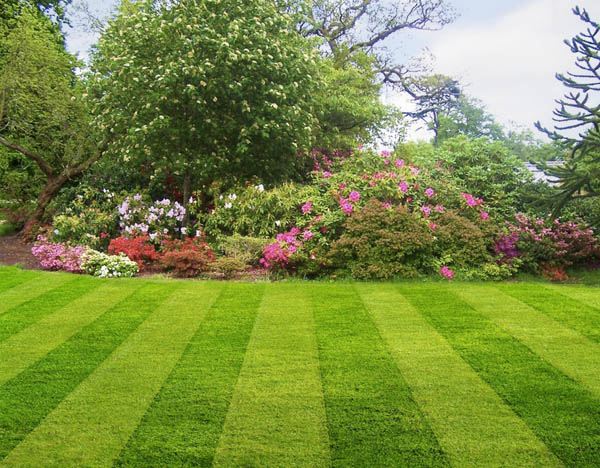
May is a great time to begin aerating. This simple process is one of the best things you can do for your lawn. By removing small plugs of grass and soil from your lawn, you create a passageway for air, water and nutrients to reach grass roots. The result is a more vigorous, healthy turf and less thatch. Aerating is also beneficial for areas that receive heavy foot traffic and have compact soil.
Power-driven aerators do the best job and can be found at most rental companies. Be sure to chose an aerator that pulls plugs completely out of the lawn, rather than simply punching holes. After aerating, you can rake up the plugs or leave them, as most plugs breakdown quickly in your lawn. Follow this process with water and fertilize for a plush, healthy lawn.
Ornamental Grass
Ornamental grasses have become increasingly popular. The grassy foliage and wispy flower heads offer unique texture and beauty to any garden, and add life to your garden in the fall when there are fewer blooms and less color.
My favorite ornamental grass is variegated Eulalia grass, Miscanthus sinensis 'Variegatus'. You'll find variegated Eulalia grass in nurseries and garden centers this month. It is a hardy grass that can be grown anywhere temperatures don't drop below 20 degrees F. Typically, variegated Eulalia grows in large clumps about five to six feet tall. The leaves are light green with white with linear stripes. Variegated Eulalia is eye-catching all summer long, especially when mixed with flowering perennials and roses. In fall, tall, brownish, mop-like flower heads reach high above the foliage and last long into winter, even after the leaves have turned brown.
Products Mentioned In This Article